
ON CONFESSION
All may. Some should. None must. ~ Unattributed Anglican aphorism

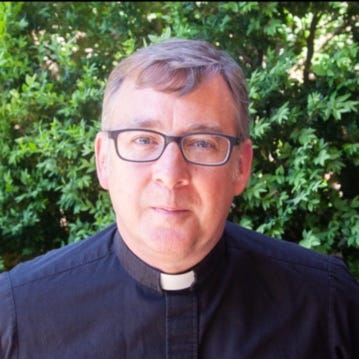
I was made a priest in my Washington, DC, parish church where I did field education back on December 8, 2007 (the Feast of the Immaculate Conception, no less! Perhaps a harbinger that one day our paths would cross, yours and mine?). At the Examination, Bishop James Montgomery charged me, in part:
You are to preach, to declare God’s forgiveness to penitent sinners, to pronounce God’s blessing, to share in the administration of the Holy Baptism and in the celebration of the mysteries of Christ’s Body and Blood, and to perform the other ministrations entrusted to you.
In the almost two decades since, few ministrations entrusted to me have been as meaningful, as important, as bracing and gratifying as declaring God’s forgiveness to penitent sinners—of which I am chief, by the way. I suspect the deep meaning I experience in hearing a confession and pronouncing absolution is rooted in my own practice of regular confession to my spiritual director. I made my first confession soon after my ordination in early 2008, and I have rarely missed a month since. This practice has been formative for me, exposing deep patterns of sin so easily glossed over in the General Confession we make at every Mass, and bringing healing, trust, and hope through the words of absolution spoken by whatever priest I happened to be sitting or kneeling before.
Perhaps it is your own practice to make a regular confession, as well. Or perhaps you’ve been an Episcopalian all your life and never let your fingers do the walking through the rite our prayer book calls “the Reconciliation of a Penitent” (BCP, 447-52.) Regardless, the importance of the Sacrament of Confession was one of the central tenets of the Oxford Movement in the 1830s, and a rite for auricular (meaning “of the ear”) confession to a priest is in our 1979 Book of Common Prayer, as well as in such Catholic classics as the Saint Augustine’s Prayer Book and the Saint Benedict’s Prayer Book. From another classic, The Practice of Religion:
The use of this Sacrament is a great privilege and brings a great blessing. It makes repentance real. It expresses the need of God’s Grace. It develops character. It increases holiness . . . Confession has been a practice and privilege of the whole Church, hallowed by the use of centuries and should be regularly used by all. (Emphasis mine.)
We see biblical justification for this sacrament in the parable of the Prodigal Son in Luke 15. The son wants his inheritance, and he wants it now. So the Father gives him the cash, and the son goes off and squanders the money. Things turn for the worse, and soon he’s reduced to earning a living feeding pigs. He thinks, “Those pigs are better off than I am! At least they have food to eat.” And he realizes—something is wrong. At this point, the gospel narrative says, “He came to himself.” That means he “came to his senses,” he saw things as they really were.
He now has a choice. He can say, “I blew it, it’s a shambles. I can’t possibly go back and let Dad know what I did. I’ll somehow muddle through on my own and scrape together an existence; Dad will never know, and I’ll never have to deal with it.” The other option is, of course, what he ends up doing. He decides he’d better go back to Dad and confess. He prepares a speech: “Father, I have sinned against heaven and before you and am no longer worthy to be called your son. Treat me as one of your hired servants.”
Just as the prodigal son made a decision, so also confession requires us to make a decision to face the reality of sin and to do something about it. Then come the beautiful words: “While he was yet at a distance . . .” This is so important. While he is still far away, the father sees him coming and gives orders to the hired hands to kill the fatted calf and get the party going. The father runs to meet his son, embraces him and kisses him. Then, and only then, does the son get to give his prepared speech. This is the loving forgiveness of God that is utterly available if we will but decide to come back in repentance.
The aphorism quoted at the head of this article—All may, some should, none must—has been likened to “the equivalent of a road sign that says: ‘Exit Ahead. But you probably won’t take it, and we’re not going to tell you why you might need to.’” But as one of your priests, charged with the cure of souls at this parish, I feel it’s incumbent on me to urge you to consider making Confession a regular practice of yours, not just in seasons like Lent but throughout the year. It’s changed my life. Let it change yours. — SW+
Father Sammy Wood, Priest-in-charge, Saint Mary the Virgin, NYC
From The Angelus, March 22, 2026
RELATED